

I'd like to start this blog post with a video from About Here, made in collaboration with the Sightline Institute:
They begin the video by acknowledging how elevators make buildings accessible to those in wheelchairs, and how elderly people struggle when elevators go out of service. They then start to complain how expensive elevators are in the US as compared to the rest of the world, and they blame it on one thing - the ADA.
The thesis of the video is that American regulation requiring such unreasonable demands as "giving wheelchair users the ability to turn around" and "letting paramedics take someone in the elevator" are overly burdensome.
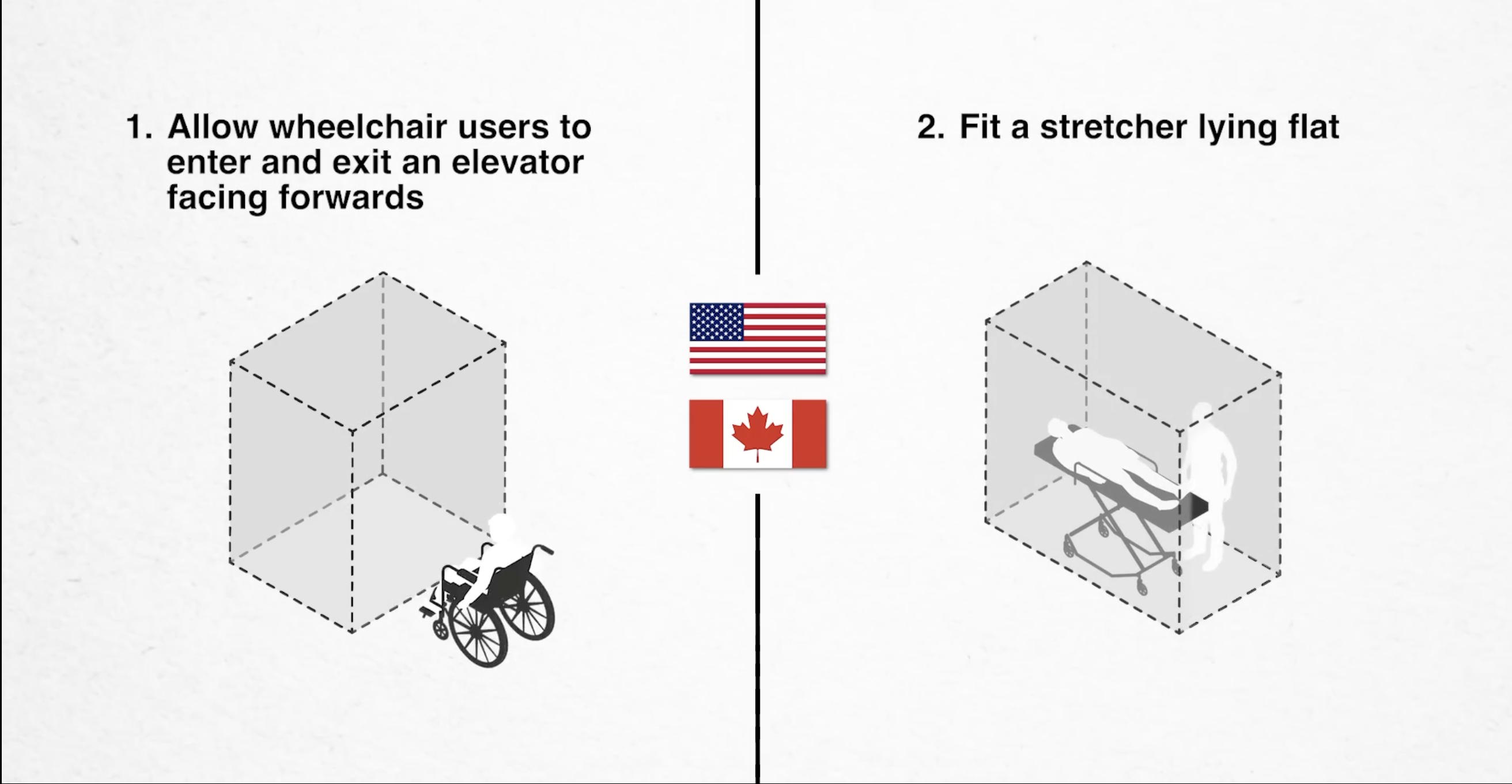
They then explain how the infallibly perfect urbanist Europeans are superior because they allow wheelchair users to be so trapped within an elevator that they aren't even able to turn around, and how paramedics should instead carry people down the stairs... by hand???
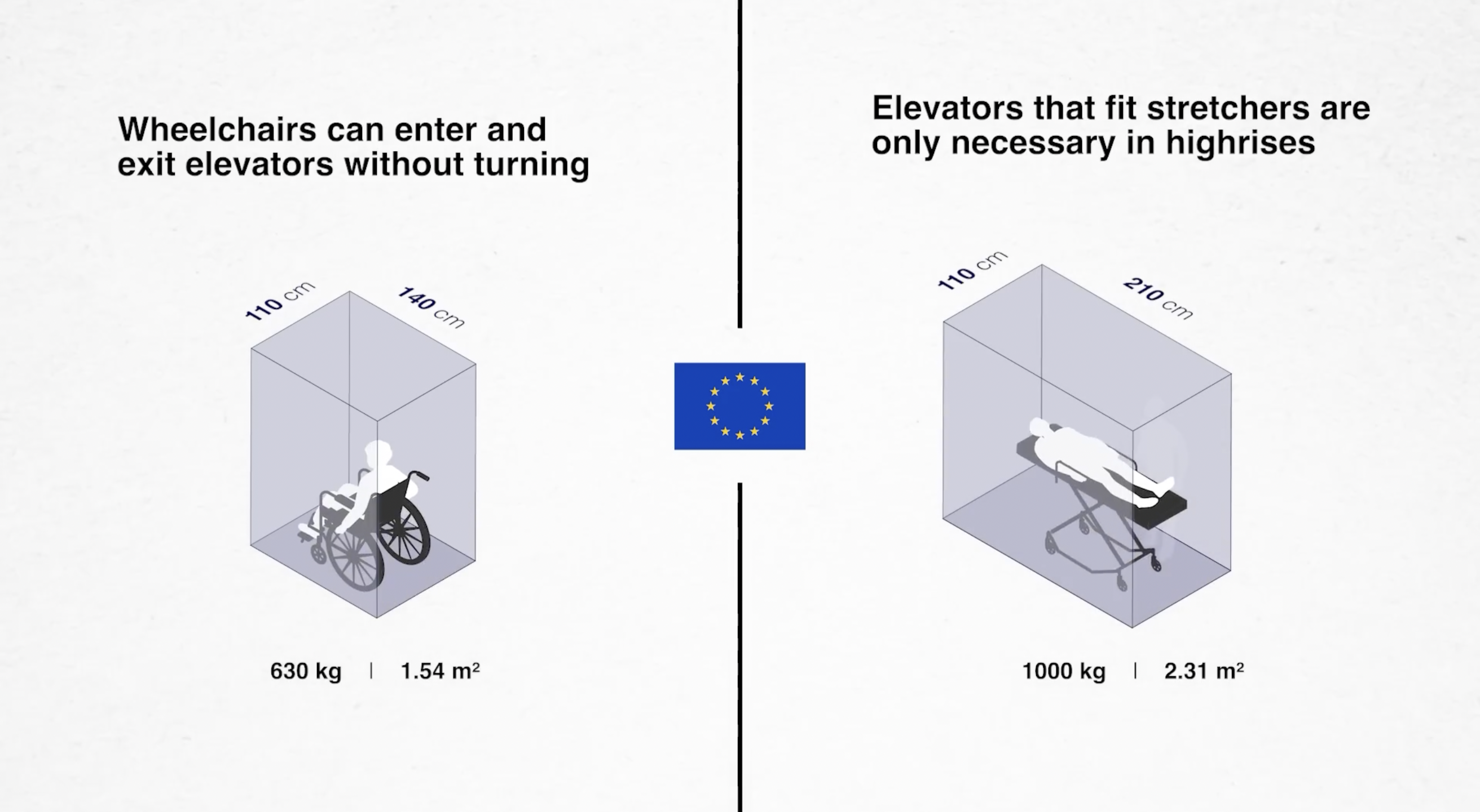
The host of the video does not use a wheelchair. The host of the video does not speak to anybody using a wheelchair. The host of the video doesn't even show how cramped it would be to use a wheelchair in the supposedly-superior European elevator size. The only thing they show is the diagram I included above.
They're only saying this because they are currently able-bodied, and don't immediately require a wide elevator. The ADA is one of the few great American accomplishments I can be proud of. It's certainly not perfect, and plenty of disabled people still face barriers to accessing things able-bodied people can easily do, but it's leaps and bounds ahead of the rest of the world. That video was a shit take and Uytae Lee should be ashamed of himself for posting it.
But whatever. I was willing to make a throwaway Bluesky post about it and call it a day.
Then I saw another one, this time from Stewart Hicks. The argument this time was over an American law requiring two staircases in apartment buildings, in order to provide redundant means of escaping a fire. They even got JD Pritzker to support repealing the law, somehow.
The thesis of this video is that "two stairwells make the building too expensive, and like... sprinklers are enough, right?". WRONG. In May of this year, 3 people died and 14 more were injured in a New York apartment fire where smoke filled the single stairwell, and that building even had a fire escape on the exterior. Advocating for single points of egress on residential buildings is another shit take. You may argue that if the building was built with a single stairwell, it must have been constructed in a time before modern sprinkler standards were in place, but there exist retroactive sprinkler standards! I'm typing this from a building originally built in 1911, and I have a modern sprinkler system hanging above my head. Permitting new construction that does not encompass a redundant means of escape is extremely short-sighted.
I'm certain that if his building were on fire, Stewart would be much more enthusiastic about redundant exit routes, but these urbanist YouTubers just can't seem to put themselves into the shoes of anybody else.
Make no mistake— I love urban areas, widespread public transport, and all the great things that come with having everything close by— I just believe that we can do a lot better when it comes to online advocacy for our cause. Part of that means that we need to stop reactionarily hating regulation we perceive as getting in the way of "peak urbanism" or whatever. It only serves to give others a negative impression of urbanists.
This also applies to:
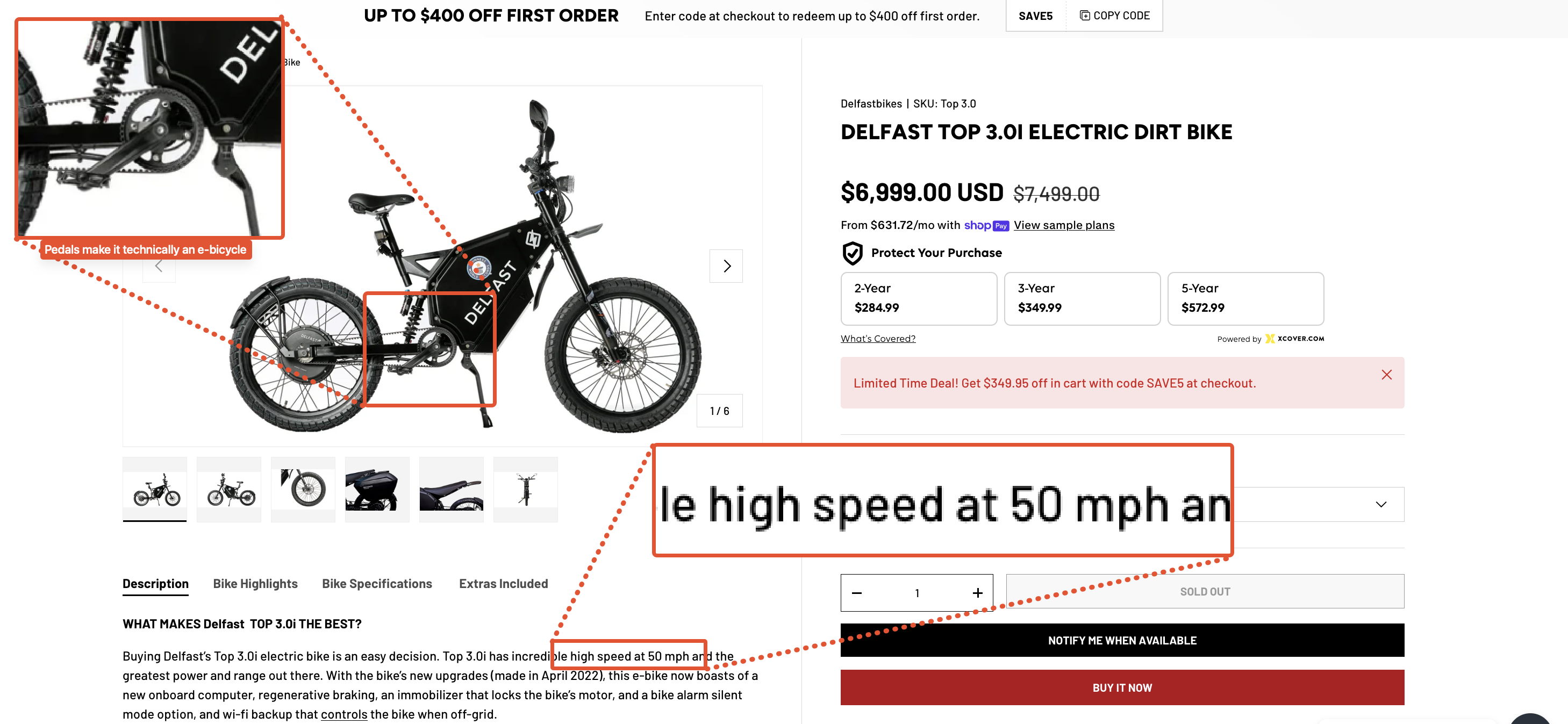
- Opposing any regulation on e-bikes, despite the e-bike status clearly being abused by manufacturers who make motorcycles with pedals.
- Blanket-opposing data centers, rather than opposing evaporative coolers and fossil fuels.
- If you're about to mention "AI data centers", it really sounds like you just be opposing AI, not data centers. I oppose AI regardless of if it is run in a data center or on a personal computer.
- Opposing safety ambassadors on public transit
- Pretending not to understand why someone wouldn't want a light rail line adjacent to their house.
- My building rumbles every time the subway passes by. Maybe that's not a good thing?
I truly believe that we can have a productive conversation and an honest middle-ground if we simply take a moment to put ourselves into the shoes of whoever benefits from whatever we oppose, or whoever opposes whatever we benefit from. As it stands today, however, we're just telling disabled people that they're not allowed enough room to turn around, dying people that they're not allowed to use a stretcher, and those escaping fire that they're worth dying for if it means slightly denser buildings.
Grady from Practical Engineering has joined the list of YouTube creators deriding the stretcher requirement for elevators. He states that building owners simply won’t install elevators in North America if they cost so much. Placing the blame on the regulation, rather than the stingy building developers, is wrong. If they won't install elevators in low-rise buildings on their own accord, make 'em. It should be an accessibility requirement to include them in new construction. Lowering the standard at the expense of those in need of emergency medical help is inconsiderate.
If a developer cannot afford to accommodate a stretcher-capable elevator in a small apartment building, and said developments are being pushed towards smaller townhomes that do not have as many stories, then that is a good thing in my view. No tall building should be without at least one stretcher-capable elevator, and one is all that the law requires. The other elevators can be of a smaller size.